

Understand what websites may really be doing with your data.
Rigmarole is a browser extension that helps you make sense of terms and conditions, privacy policies, and data use policies—so you can more easily understand how a website, product, or online service may collect, store, share, or use your information.
THE PROBLEM
The internet runs on agreements almost no one actually reads.
Most users have reasonable questions. Very few have the time, patience, or legal background to find clear answers.
Every day, people sign up for platforms, install apps, accept cookies, use AI-powered tools, and otherwise browse the internet without fully understanding what they are agreeing to.
Not because they do not care, but because the answers are buried in long, dense legal documents written for compliance rather than clarity. That matters more than ever in a digital world where websites and online services may collect behavioral data, store personal information, share data with third parties, and in some cases use customer data to improve or train AI systems.

Too Long
Important answers are often buried in pages of legal language

Too Vague
Even when you read the policy, it is not always obvious what it means in practice.

Too Important
Data use decisions affect privacy, trust, and how comfortable you feel using a product
WHAT RIGMAROLE DOES
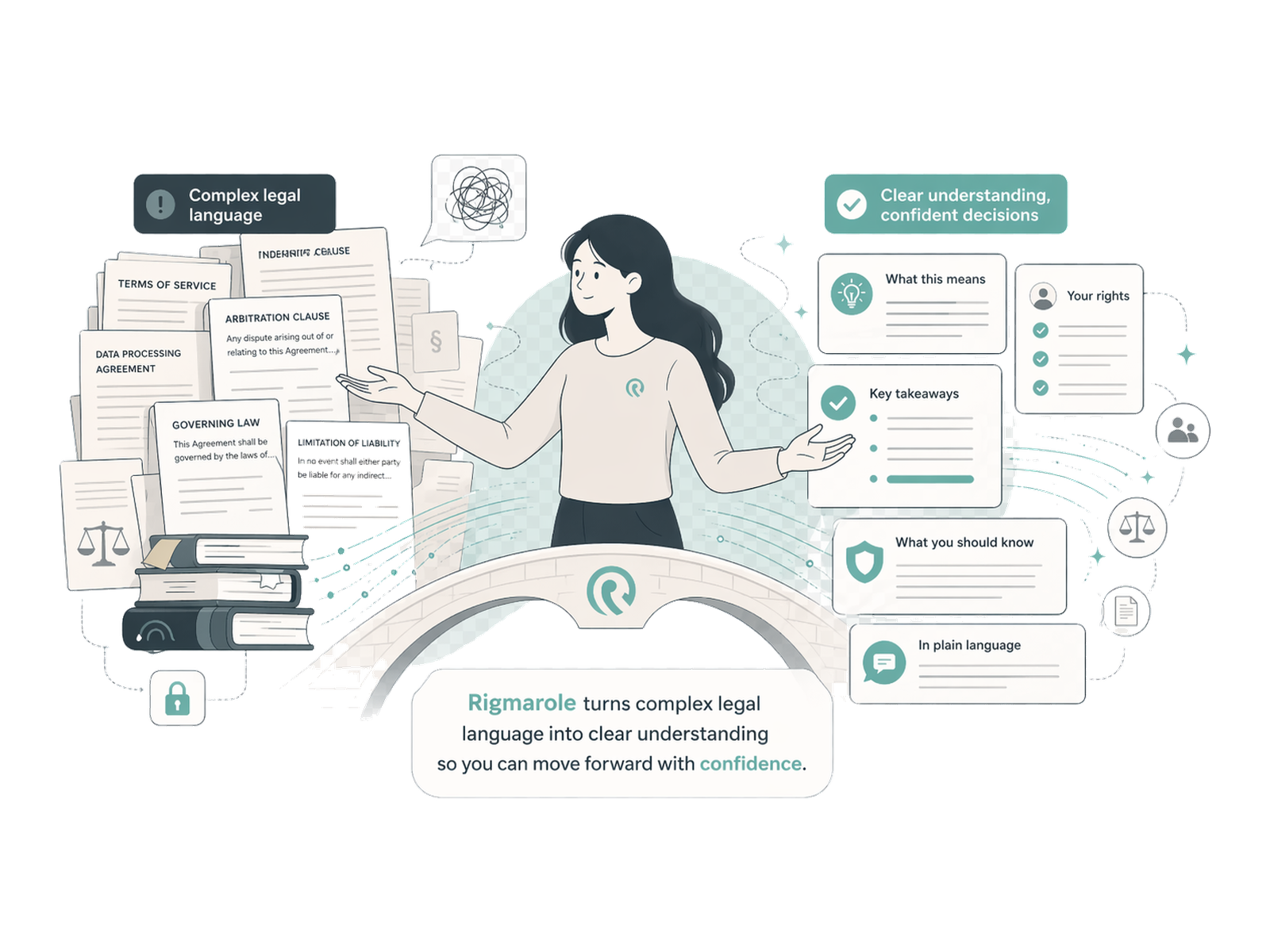
Rigmarole turns policy language into something you can actually use
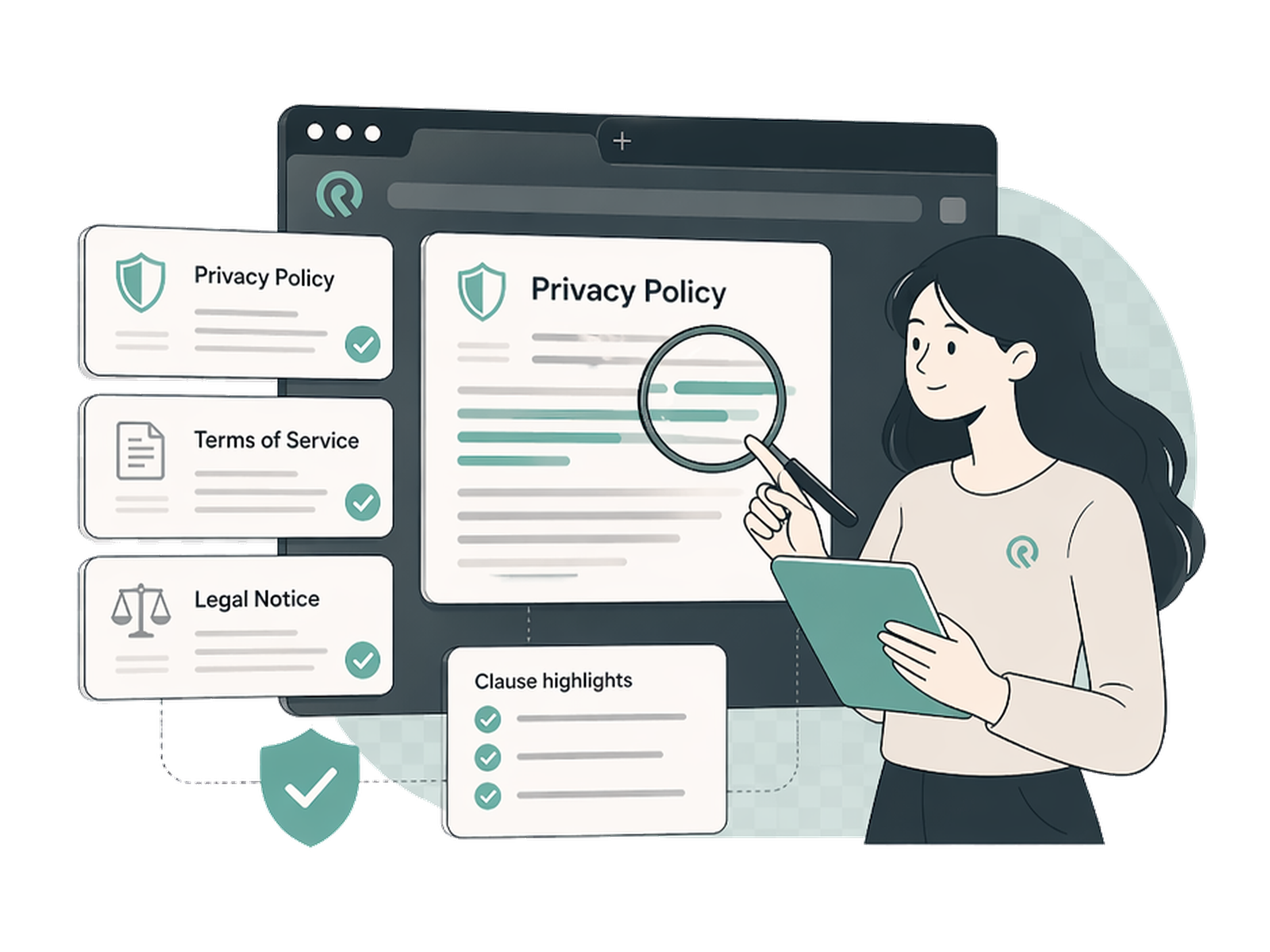
Instead of forcing you to work through every line of a privacy policy or terms page on your own, Rigmarole helps you get to the parts that matter faster. It is built to make legal policies feel less like a wall of text and more like something you can explore, question, and understand.
Scan policies more easily
Review terms and conditions, privacy policies, and related legal documents directly from your browser.
See the issues that matter
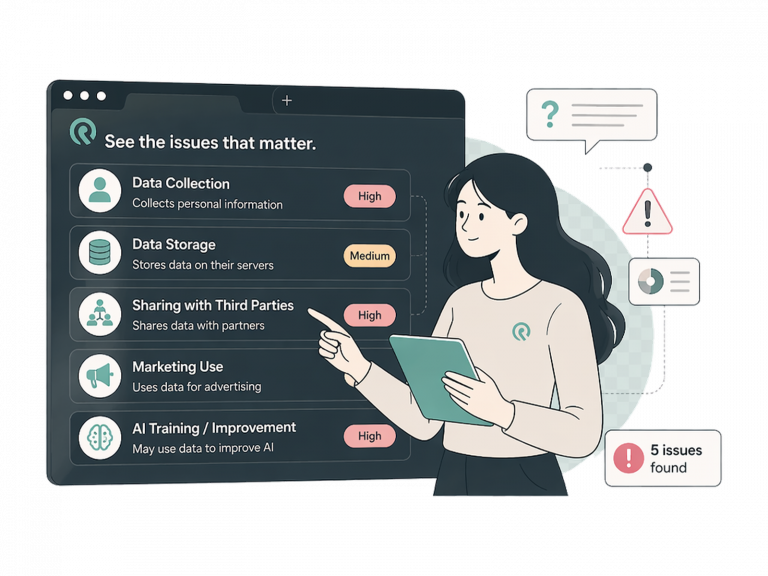
Quickly understand whether a site may collect personal data, store it, share it, use it for marketing, or rely on it to improve AI systems or related tools.
Ask questions in plain English
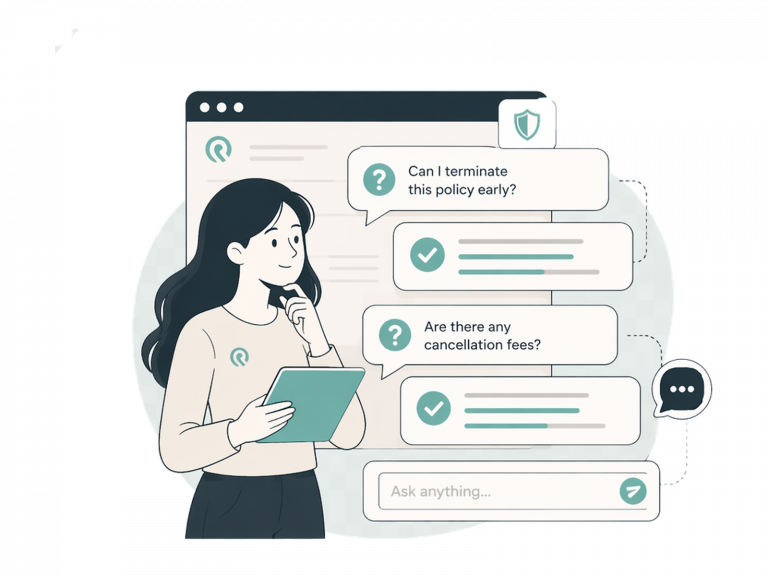
Use the language you would naturally use yourself: “Does this service train AI on my data?” “Does it keep my files?” “Does it share information with third parties?”
Make more informed decisions
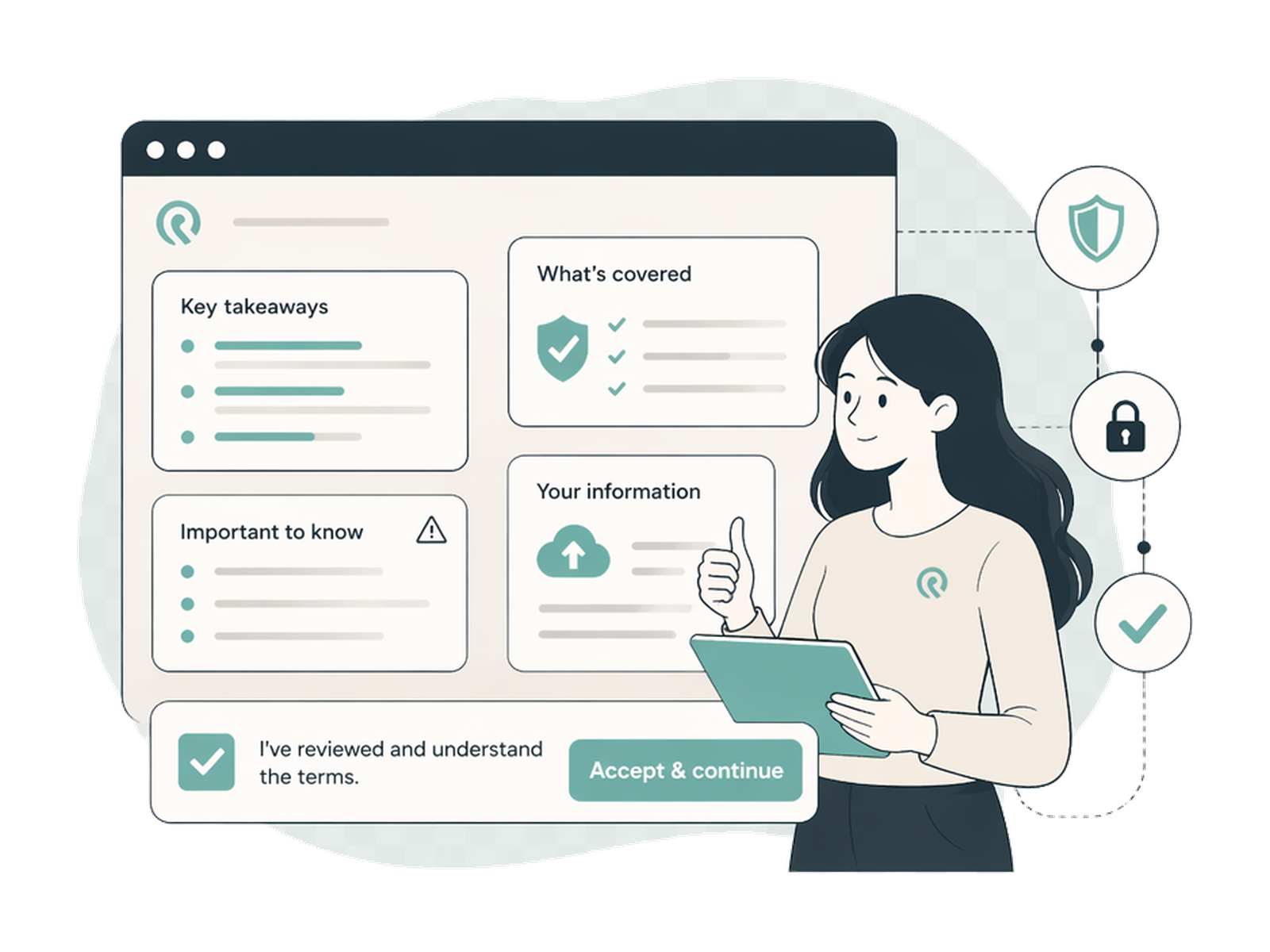
Rigmarole helps you get a clearer sense of what a website or product is asking you to accept before you sign up, upload, or click agree.
HOW IT WORKS

Visit the website or service
Go to the product, platform, or site you want to better understand.

Open Rigmarole
Use the extension to surface the site’s legal and policy materials.

Decide with more clarity
Get a clearer picture before signing up, uploading information, or clicking accept.

Ask what you want to know
Prompt Rigmarole in plain language to find the answers you care about.
WHY RIGMAROLE EXISITS
Rigmarole grew out of a simple but important observation.
People should not need to be lawyers to better understand how a website or online service may use their data.
As an immigration lawyer-turned-tech founder, I spent years hearing professionals express hesitation about new software, especially AI tools, because they were not sure how those products would use sensitive information.The answers were often already there—in the terms and conditions, privacy policy, data use policy, or related legal documents.
The problem was that those answers were hidden inside documents most people do not have the time, patience, or training to work through.
That led to a broader realization: if lawyers were not closely reading these policies, most everyday internet users almost certainly were not either.
Rigmarole was created to help close that gap. The point is not to get rid of legal documents. It is to make them more accessible, more understandable, and more useful to the people they affect.
WHO IS IT FOR
Built for people who want more clarity online
Rigmarole starts with individual users, but the problem it addresses is much broader.

Everyday users
For people who want to better understand what they are agreeing to before using a site, app, or online service.
Privacy-conscious professionals
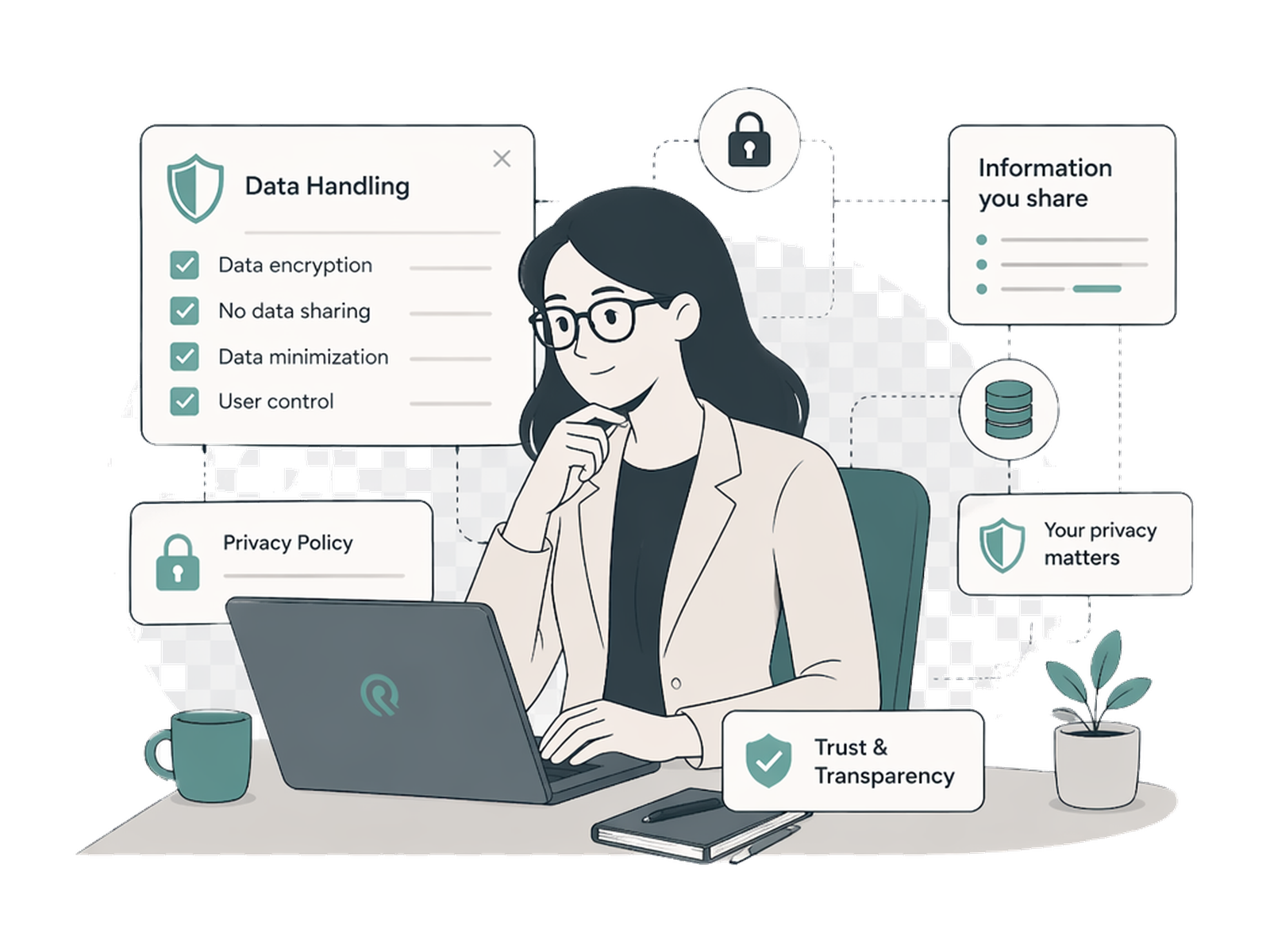
For lawyers, consultants, founders, and professionals who want more confidence in how digital tools handle sensitive information.
People using AI tools
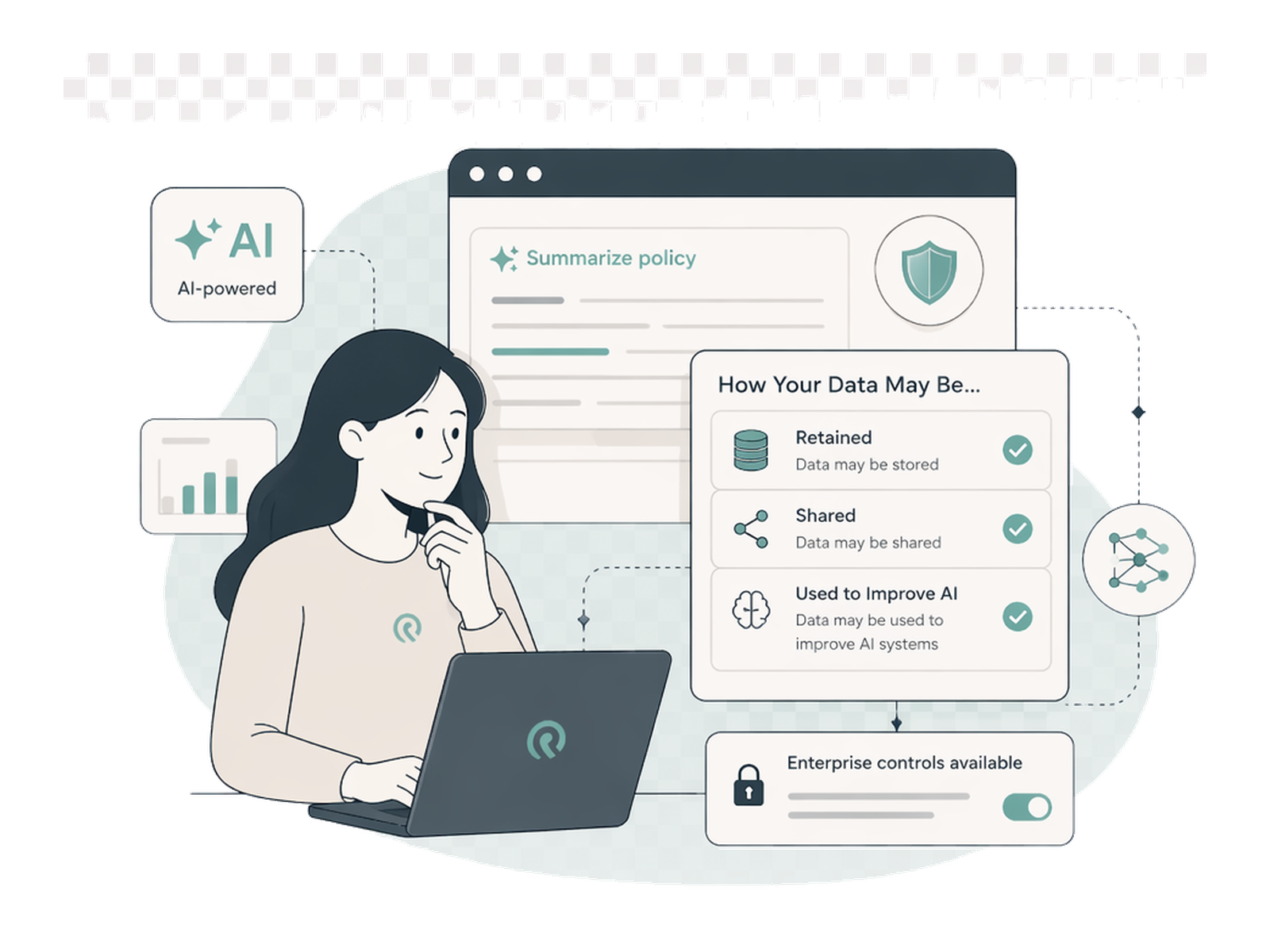
For anyone exploring new AI products and wanting more clarity around data retention, training, and sharing practices.
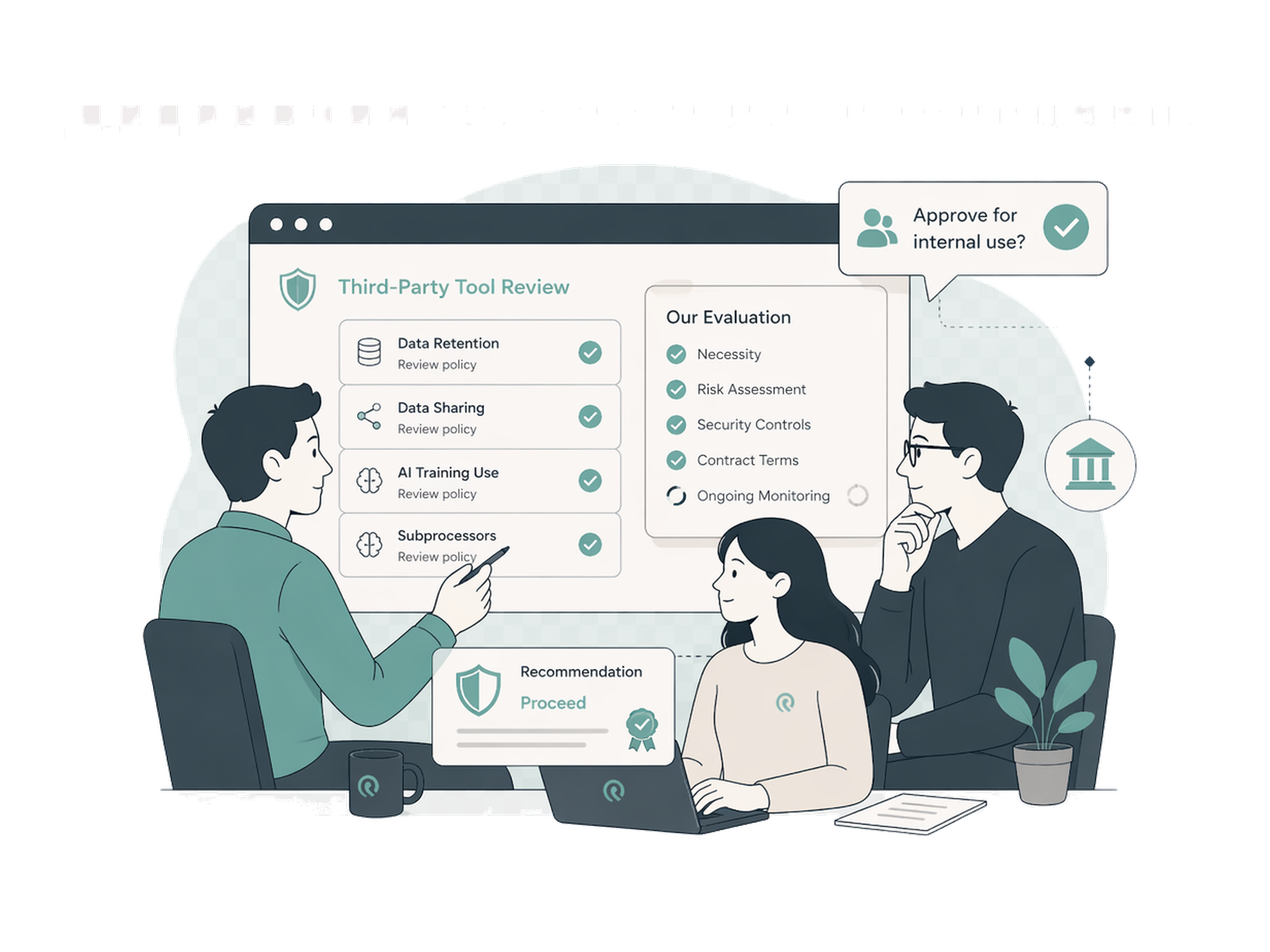
Future teams and companies
Over time, Rigmarole may also support organizations that want a simpler way to review third-party tools before adopting them internally.

WHAT MAKES RIGMAROLE DIFFERENT?
Built for clarity, not just compliance
Rigmarole is built around a simple belief: legal transparency should be genuinely usable.
Plain-language interaction
You should be able to ask straightforward questions and get straightforward answers.
Focused on what people actually care about
Not just abstract summaries, but the issues users really want to understand—data collection, storage, sharing, retention, and AI-related use.
Grounded in legal and product experience
Rigmarole sits at the intersection of legal training, practical user frustration, and a desire to make digital trust easier to navigate.
Questions Rigmarole is built to help you answer
Because “it is probably fine” is not much of a privacy strategy.
- Does this company store my data?
- Does this product use customer information to train AI?
- Is my data shared with third parties?
- What happens to files or content I upload?
- Can this company retain my information after I stop using the service?
- Where in the policy does it say that?
More understanding. More control.
Less blind acceptance.
Read the fine print with more clarity.
Rigmarole helps turn legal policy documents into something people can actually work with. Whether you are evaluating a new AI tool, signing up for a platform, or simply trying to be more informed online, Rigmarole is designed to help you understand more before you agree. We exists to help people move through the modern internet with more confidence. When policies become easier to understand, users are in a better position to decide what tools they trust, what tradeoffs they are willing to accept, and where they draw the line.